What is a Microprocessor?
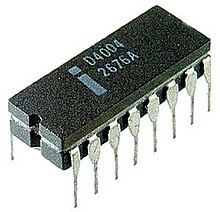 |
| img : intel 4004 the first commercial microprocessor |
The microprocessor, also known as the Central Processing Unit (CPU), is the brain of all computers and many household and electronic devices. Multiple microprocessors, working together, are the "hearts" of datacenters, super-computers, communications products, and other digital devices.
The first microprocessor was the Intel 4004, introduced in 1971. The 4004 was not very powerful; it was primarily used to perform simple mathematical operations in a calculator called “Busicom.”
Just like microwaves or telephones, devices with microprocessors have become so integrated into our daily lives, that we cannot imagine a life without them.
It’s sometimes hard to believe that only 60 years ago, computers were rare and were not available for the wider public. It wasn't until the '80s that computers entered our homes and - thanks to the microprocessor - really made an impact on the average person's life.
Nowadays, modern microprocessors can perform extremely sophisticated operations in areas such as meteorology, aviation, nuclear physics and engineering, and take up much less space as well as delivering superior performance.
Over the past 40 years, microprocessors have become faster and more powerful, yet increasingly smaller and more affordable.
The manufacturing of a CPU is a highly complex and demanding process involving multiple hundreds of steps in “cleanrooms.” Cleanrooms or manufacturing plants, contain air which is 1,000 times cleaner than a hospital’s operation theater . The building of one plant costs approximately $5bn.
Microprocessor (logic chip)

Tidak ada komentar:
Posting Komentar